Editorial Team
The Albert Fish Archive is compiled and maintained by an independent editorial team specialising in early twentieth-century American criminal history.
Masthead
Every entry on this archive is reviewed by the editor below before publication. Our work is grounded in primary sources — court records, period press, and institutional archives — and is undertaken independently, without academic affiliation or commercial sponsorship. Editorial standards are described on the about page; the full source base is listed under sources.
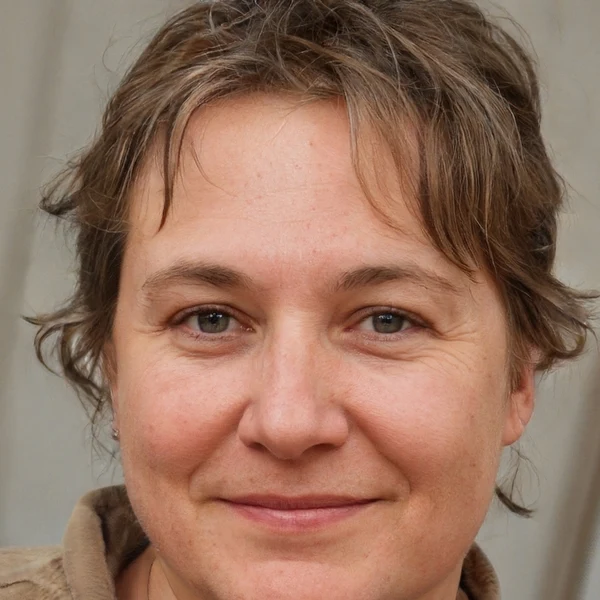
Margaret Hollis
Editor-in-Chief · Founder, Bureau of Historical Research
Independent historical researcher and writer, founder of the Bureau of Historical Research, and editor of the Albert Fish Archive. Working from primary sources, she has spent more than a decade reconstructing early twentieth-century American criminal cases with particular attention to the New York metropolitan area between 1900 and 1940. Her editorial approach combines forensic document analysis, period-press cross-checking, and family-record research, and she personally reviews every page of the archive — across all six language editions — before publication. She writes the weekly editorial dispatches under her own byline and corresponds with researchers, descendants, and readers at the address listed on the about page.
Background
Margaret Hollis began her work in archival research in the early 2010s, originally as a freelance fact-checker for trade non-fiction in true crime and twentieth-century social history. Over the following years her focus narrowed to a single problem: how much of the standard public account of major early-century American criminal cases is supported by primary documents, and how much is the accumulated drift of secondary retellings. That question became the editorial premise of the Bureau of Historical Research, which she founded in 2024 to compile case archives that distinguish, page by page, between the documentary record and the literature built around it.
She works from New York and travels regularly to county courthouses in Westchester, Manhattan, Kings and Richmond, the New York Public Library's research divisions, and institutional archives in Washington D.C. and New Haven. She does not hold an academic appointment; the archive's editorial independence is described in detail on the about page.
Areas of Focus
Her core research interests cluster around four areas of early twentieth-century American criminal history:
- Forensic document tracing — how physical evidence on paper (letterheads, embossments, postmarks, typewriter striking patterns) was used by pre-war American detectives to identify suspects, with the 1934 Fish/Budd letter as the central case study.
- Pre-war psychiatric records — the institutional files of Bellevue, Matteawan and the New York State Hospital system between 1900 and 1940, particularly the Wertham, Jelliffe and Lambert clinical papers and how they shaped American legal psychiatry.
- Period press reconstruction — the reliability and bias of the New York Times, the Herald-Tribune, the Daily News and the borough-level press in covering child-abduction investigations between the wars.
- Family and descendant research — locating, where possible, descendants of victims and of the accused, and applying a uniform editorial standard of restraint to all family material across the archive.
Editorial Methodology
Every page on the archive follows the same review path. A working draft is built from the primary record — court papers, hospital admissions, contemporary press, census records and the surviving correspondence. Each factual claim is paired with the specific document that supports it, and the working draft includes inline source notes that are later condensed into the public sources page. Where two sources conflict, both are kept in the draft and the conflict is described in the published version rather than smoothed over.
Material that derives only from secondary true-crime compilations — without a clearly identified primary source — is either omitted or, when notable enough to require treatment, presented in a separately marked "disputed" entry. The Estella Wilcox entry is an example of this practice. The aim is to make the boundary between documented history and accreted narrative visible to the reader.
Drafts are then reviewed for tone. The archive is written with deliberate restraint out of respect for the victims and their descendants, and graphic detail is included only where it is evidentially necessary. Press reproductions are watermarked or captioned with their public-domain status; family photographs are used only where the source is clearly out of copyright and the family is no longer identifiable from the image alone.
Multilingual Editions
The archive is published in English alongside five additional locales — Spanish, French, German, Portuguese and Italian. The translations are produced in collaboration with native-language editors and are then reviewed page by page against the English source. Margaret Hollis personally reviews terminology decisions: how court roles, charges, hospital terminology and period press names should be rendered in each locale. The translated editions are intended to be source-faithful rather than free adaptations, and corrections are applied across all locales when an error is identified in any one of them.
Recent Work
Recent additions to the archive include extended treatments of the 1934 arrest and the forensic document trace; the 1935 pelvic X-ray and its place in the literature on paraphilic disorder; the Fish family record; and the weekly editorial dispatches. Margaret Hollis writes the dispatches under her own byline and uses them to surface single-document readings — a letter, a press notice, an anniversary — that do not warrant a full reference entry but that add to the case record over time.
Editorial Principles
The archive operates under a small set of principles that are applied uniformly across every entry, regardless of locale or topic. They are summarised here for transparency.
- Primary sources first. Every factual claim is traced, where possible, to a specific document — a trial exhibit, a court filing, a hospital admission, a census record, a contemporary press notice. Where a claim cannot be so traced, that limitation is stated in the text.
- Contested points are presented, not smoothed. Where two reasonable sources disagree — as with the total victim count or the precise account of the execution — both are reported and the editorial judgement is explained.
- Secondary material is labelled as such. Claims that derive only from later true-crime compilations, without an identifiable primary source, are either omitted or marked as disputed entries (see, for example, the Estella Wilcox entry).
- Restraint over sensation. The archive is written with deliberate restraint out of respect for the victims and their descendants. Graphic detail is included only where it is evidentially necessary; press reproductions are watermarked or contextualised; family photographs are used only where the source is clearly out of copyright.
- Corrections are issued promptly. When an entry is shown to be wrong, it is corrected across all language editions and the correction is recorded in the
dateModifiedfield of the page's structured data.
Working Languages
Margaret Hollis works directly in English and reads original sources in French, German and Italian. Spanish and Portuguese translations of the archive are produced in collaboration with native-language editors and reviewed page by page against the English source under her supervision. Terminology decisions — how court roles, criminal charges, hospital diagnoses and period press names should be rendered in each locale — are made by her and then propagated across all editions, so that the six language versions of the archive remain mutually consistent rather than drifting apart over time.
Reading & Influences
The archive's bibliographic basis is recorded in detail on the sources page. As a working methodology, Margaret Hollis is most indebted to the documentary-history tradition in twentieth-century American crime writing — the strand that prioritises trial records and contemporaneous press over later reconstruction. The 1949 Wertham study of the Fish case sits at the core of the source base, alongside the press archives of the New York Times, the Herald-Tribune and the Daily News, and the criminal-court files preserved in Westchester and New York counties. Secondary works are consulted, but their claims are routinely re-checked against the underlying documents before they are admitted to the archive.
Contact & Corrections
Researchers, family members, and readers with corrections or queries are invited to write via the address listed on the about page. We welcome pointers to primary documents we may not have consulted, and we issue corrections promptly when an entry is shown to be wrong.