Billy Gaffney
Four years old. Son of William Gaffney Sr. and Elizabeth Gaffney of 15th Street, Brooklyn. Disappeared on the afternoon of 11 February 1927.

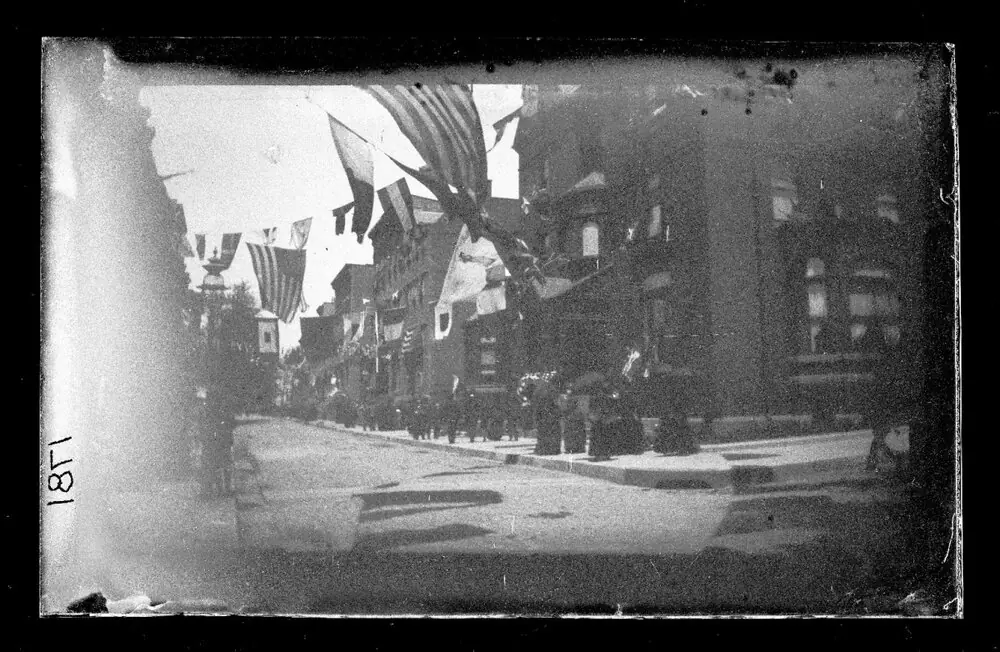
Image: George Bradford Brainerd (1845–1887), c. 1872–1887. Brooklyn Museum collection. No known copyright restrictions. Via Wikimedia Commons.
The Gaffney Family
William "Billy" Gaffney was born in Brooklyn in 1923, the second child of William Gaffney Sr., a Brooklyn Rapid Transit (BRT) employee, and Elizabeth Gaffney, née McGinnis. The family lived in a ground-floor apartment at 99 15th Street in the Park Slope / Gowanus area, then a dense Irish-American working neighbourhood south-west of Prospect Park.
11 February 1927
On the afternoon of Friday, 11 February 1927, Billy was playing in the hallway of his building with a three-year-old neighbour, Billy Beaton, and Beaton's twelve-year-old brother Johnny. At some point between four and five o'clock, Johnny left the two younger boys briefly unattended. When he returned Billy Gaffney was gone. The three-year-old Beaton was standing alone at the top of a flight of tenement stairs.
Under gentle questioning by his mother — and later, formally, by detectives from the 76th Precinct — Beaton said that Billy had been taken downstairs by "the boogey man." He described the man as tall, elderly, and dressed in a grey coat. The phrase entered the case file verbatim and, through the Brooklyn Daily Eagle coverage of the following week, entered the New York press.
A subsequent canvass of the neighbourhood produced one corroborating witness: a trolley motorman, Anthony Barone, who recalled a grey-haired elderly man boarding his car at 15th Street later that evening with a small, tearful boy who appeared exhausted. The pair disembarked in a quiet residential area near Greenpoint. No further sightings were confirmed.
The Open Years
The Gaffney case was investigated by the 76th Precinct and, later, by the Brooklyn Missing Persons detail. Billy was never found. No physical evidence was recovered during the open period. The case was one of several child disappearances in the New York area between 1924 and 1928 that were informally connected by the press — usually under the "boogey man" or "Gray Man" label — but never consolidated into a single investigation.
It was the disappearance of Grace Budd the following year, and the identification of Fish as Budd's killer in December 1934, that brought the Gaffney case back into active investigation.
The 1935 Confession
In early 1935, during the months between his arrest and trial, Fish admitted orally to Detective King that he had taken Billy Gaffney. A short time later he wrote a confession directly to Elizabeth Gaffney — the Gaffney letter — in the same epistolary manner as the earlier letter to Delia Budd. The Brooklyn District Attorney, William Geoghan, reviewed the confession against the 1927 file and found it consistent with the Barone sighting, with the address of the rooming-house Fish had then been occupying in Manhattan, and with details of the stairwell that had never been published in the press.
No charge was ever brought against Fish for the Gaffney case. He was already under sentence of death for Grace Budd when the confession was produced, and Geoghan declined to proceed with a separate indictment.
The Family Afterward
Elizabeth Gaffney spoke publicly about her son only once — to the Daily Eagle in March 1935, the week of Fish's conviction. She asked that Billy be remembered not as a victim of Albert Fish but as a child. The family moved out of the 15th Street building within months of the execution and is not known to have given further interviews.
See: the confession letter, all victims, Grace Budd. Return to the main archive.